Home » Integrating Endpoint Central On-Premise with Power BI Desktop
 

Introduction

The Endpoint Central Custom Connector enables users to fetch and analyze data from Endpoint Central On-Premise directly within Power BI Desktop. This integration allows administrators to build powerful visualizations and reports using endpoint management data from their Endpoint Central environment.

This document provides step-by-step guidance on integrating Endpoint Central On-Premise with Power BI Desktop using the Endpoint Central Custom Connector to retrieve and visualize data.
Prerequisites

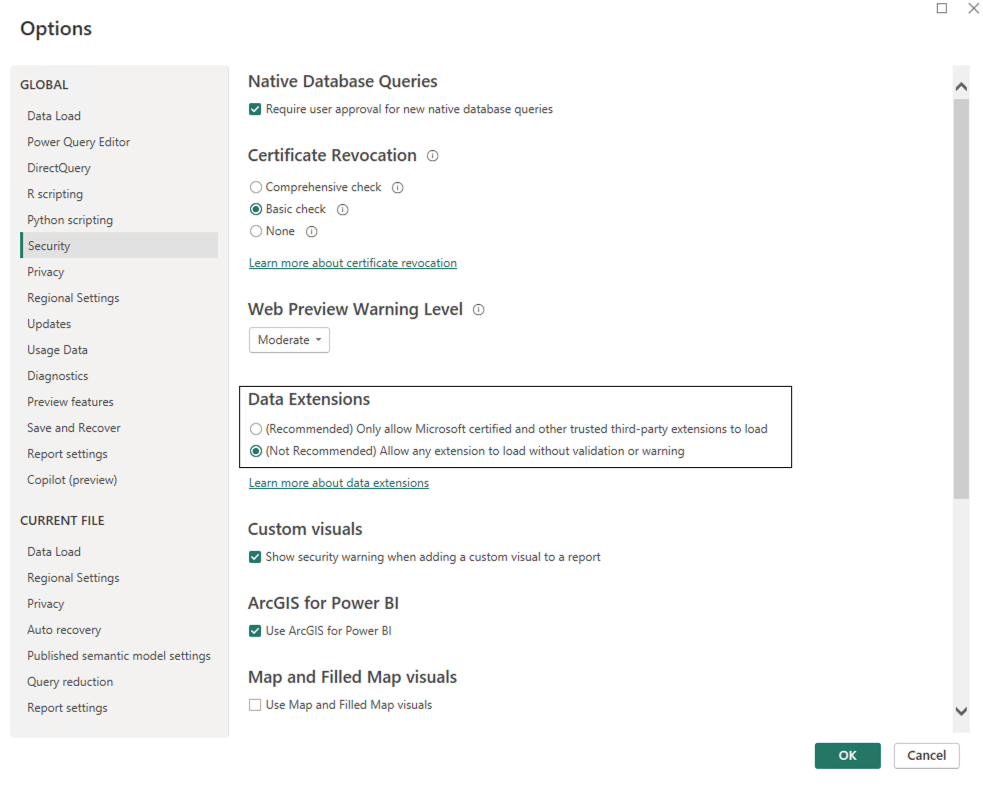
  1. Enable the Power BI Desktop option to bypass custom connector trust verification:
    1. Open Power BI Desktop.
    2. Go to File > Options > Security.
    3. Enable the option Allow any extension to load without validating or warning”.

Power BI data extension settings screenshot

Integration Steps:

  1. Download the Endpoint Central Connector file.(SHA Checksum: 757baae9a92c708924ec0f85d9e82fc32e0ae0f44f2af56aa45f6dabc5301c72)
  2. Move the downloaded file to the following directory:
    <Your Documents Folder>\Power BI Desktop\Custom Connectors
    Example

    C:\Users\Administrator\Documents\Power BI Desktop\Custom Connectors

    Create a folder named Custom Connectors if it does not already exist.
  3. Close and reopen Power BI Desktop to load the connector.
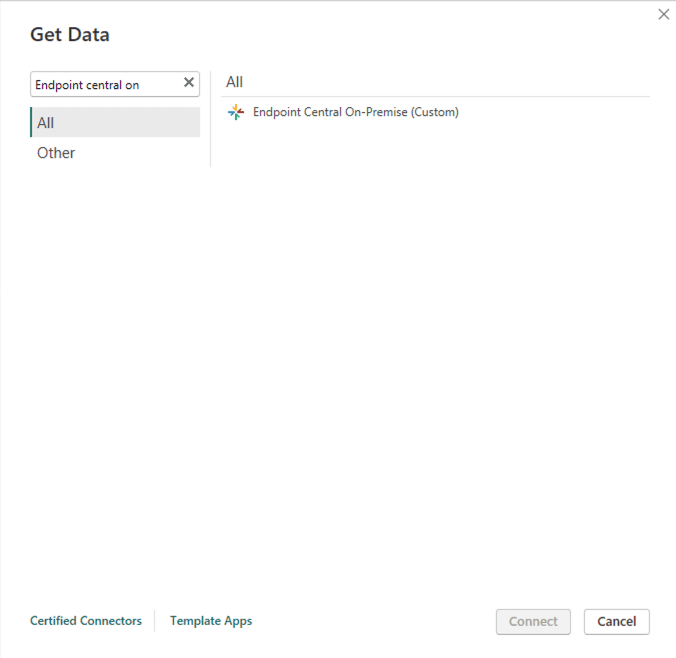
  4. In Power BI Desktop, go to Get Data, search and select Endpoint Central On-Premise, and click Connect.

Power BI select connector screenshot

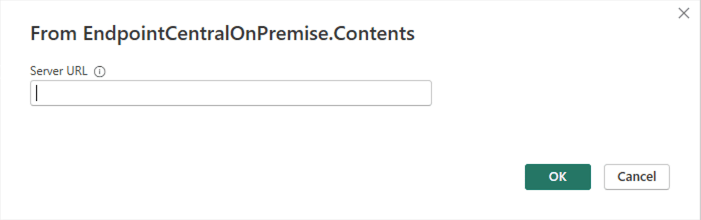
  1. Enter the Endpoint Central Server URL using HTTPS and click OK.

Endpoint Central server URL screenshot

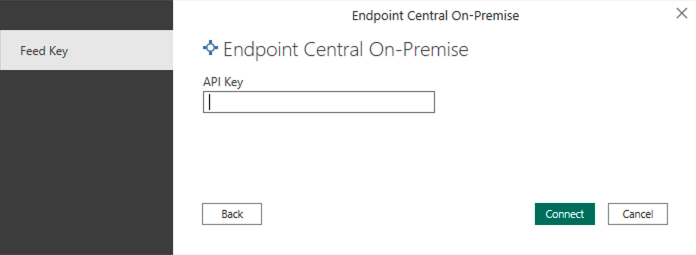
  1. Generate and enter the Endpoint Central API Key with Admin privileges. To generate API key in Endpoint Central, refer to this document.
  2. Click Connect to proceed.

Endpoint Central API screenshot

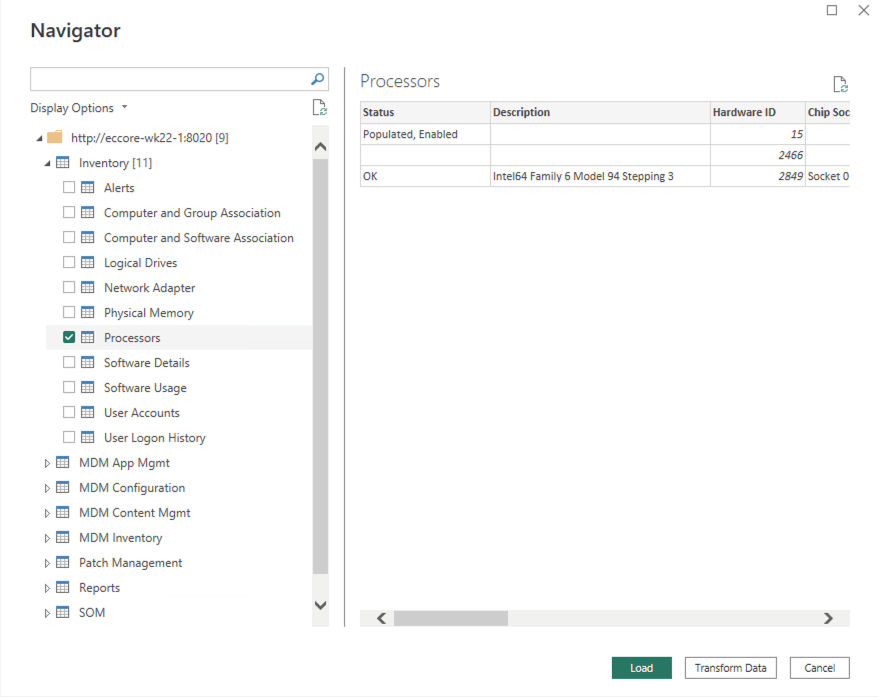
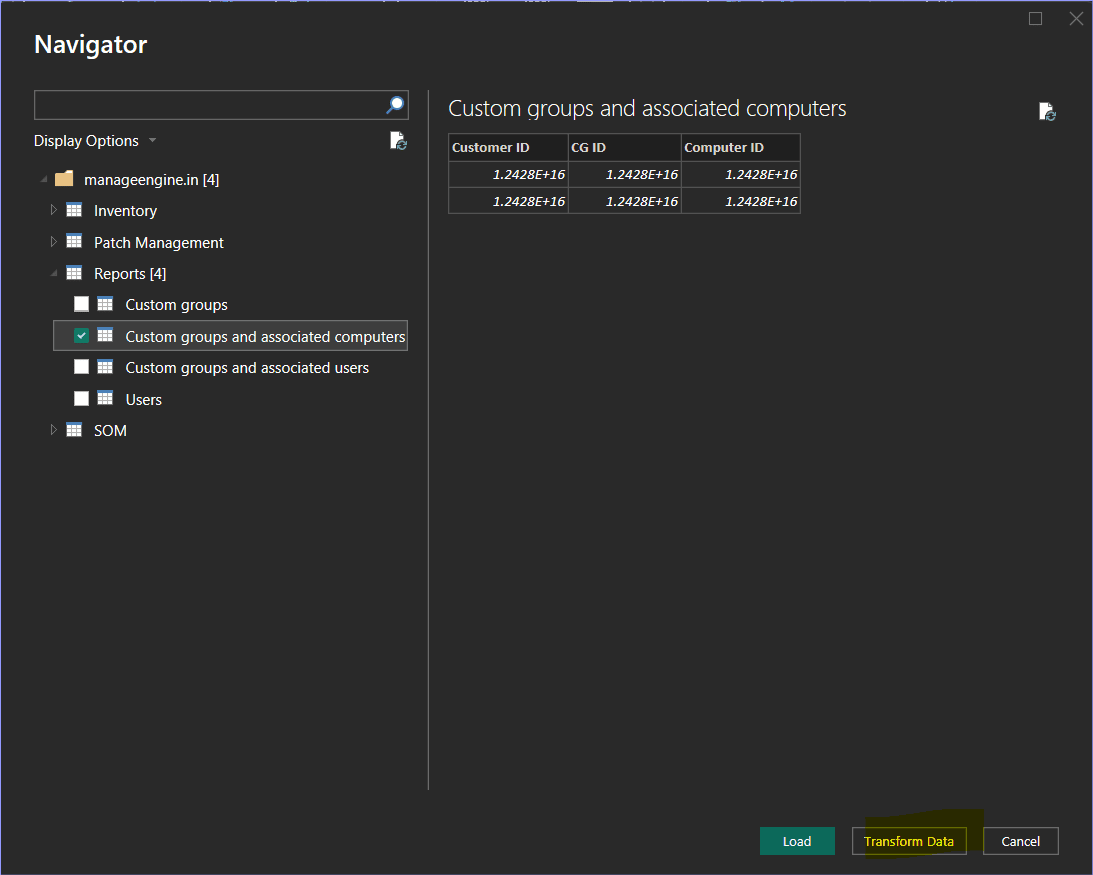
  1. The connector will list all available modules for your account. Expand the drop-down list and select the required tables under each module.
  2. A sample data preview will appear in the right-hand pane for verification.

Power BI module selection screenshot

Handling Exponential Data Format

Some columns may display data in exponential format. To make these values readable, use one of the following methods:
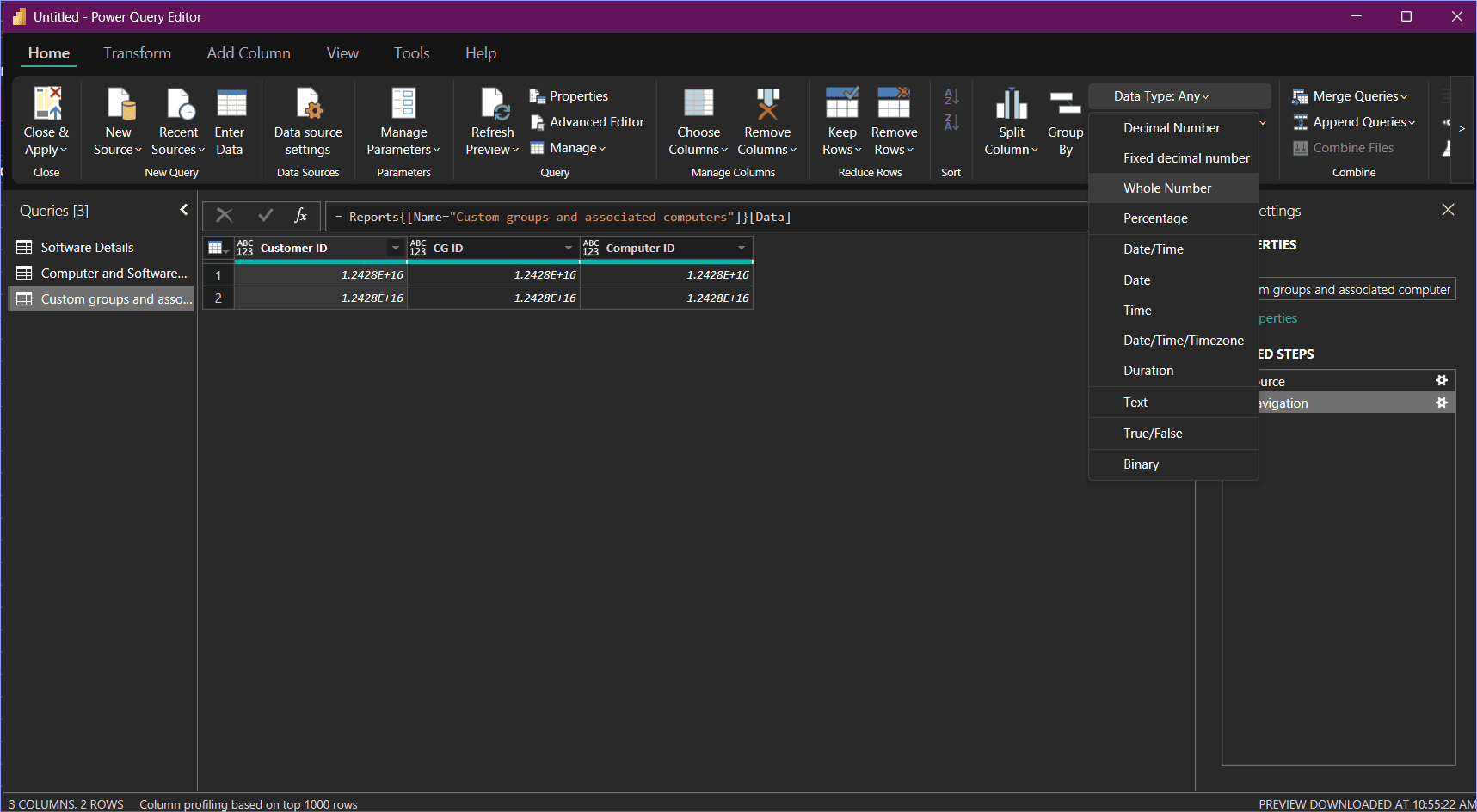
Option 1: During “Transform Data”

  1. Identify the affected column in the data preview window and click Transform Data.

Power BI transform data screenshot

  1. In the Power Query Editor, select the column, go to Data Type, and choose Whole Number.
  2. Click Apply & Close.

Power BI apply data type screenshot

Option 2: After Data Load

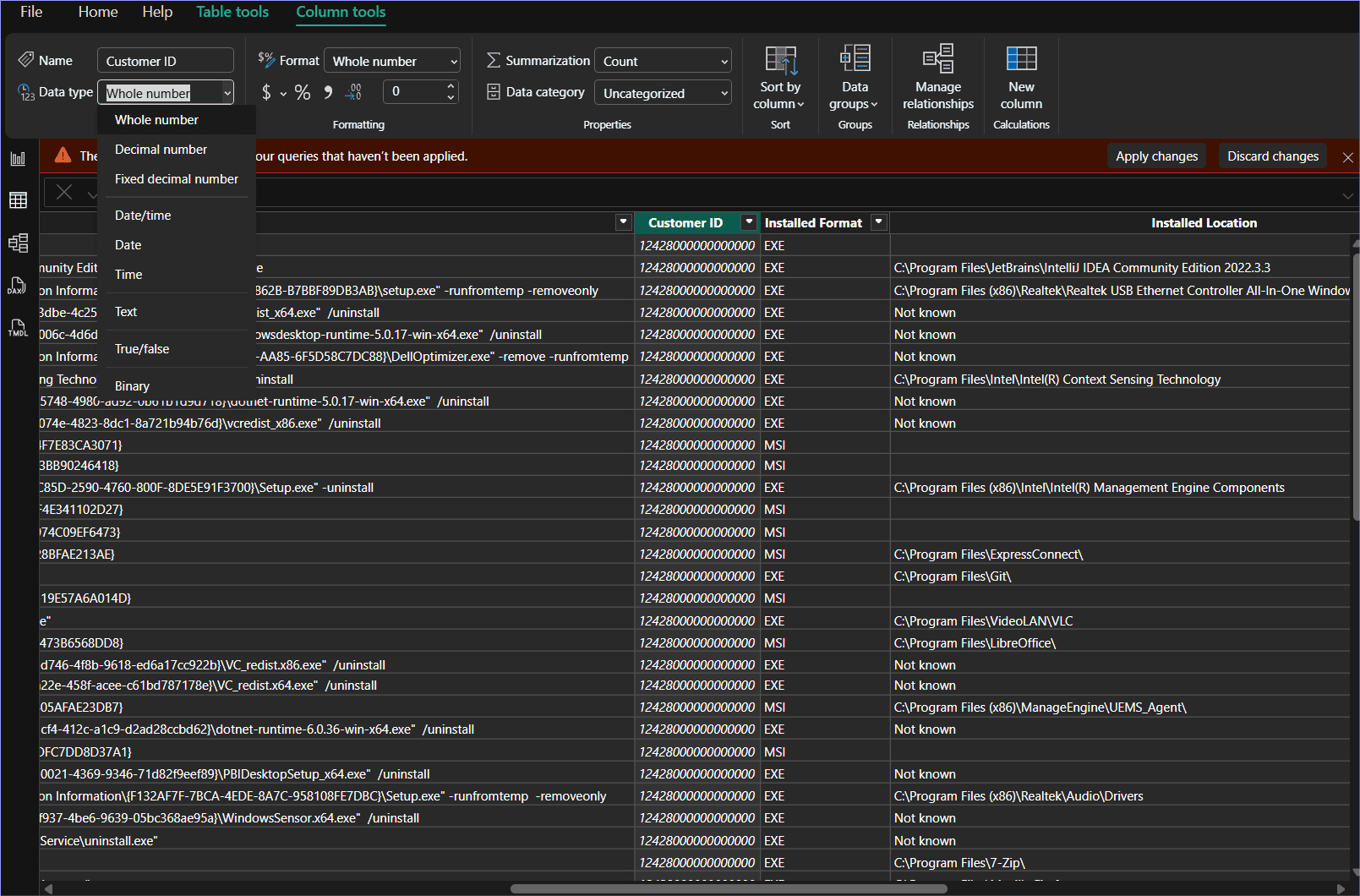
  1. In the Table View, select the column.
  2. Go to Column Tools > Data Type and select Whole Number.

Power BI column tools data type screenshot

Note: This is a one-time action. Once updated, Power BI will retain the data type even after future refreshes.

Saving and Creating Dashboards

  1. Use the imported data to create custom reports and dashboards in Power BI.
  2. Go to File > Save and store your project as a .pbix file for future use.

Troubleshooting Steps

Ensure Latest Power BI Desktop Version

Verify that you are using the most recent version of Power BI Desktop.
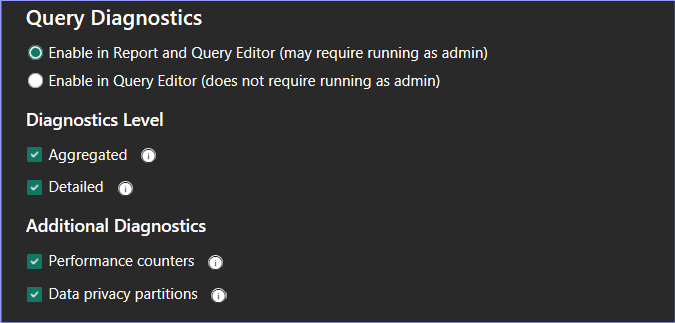
Enable Diagnostic Logging

  1. Open Power BI Desktop.
  2. Go to File > Options and settings > Options > Diagnostics.
  3. Check Enable tracing and enable all Diagnostics levels and Additional Diagnostics options.

Power BI diagnostics settings screenshot

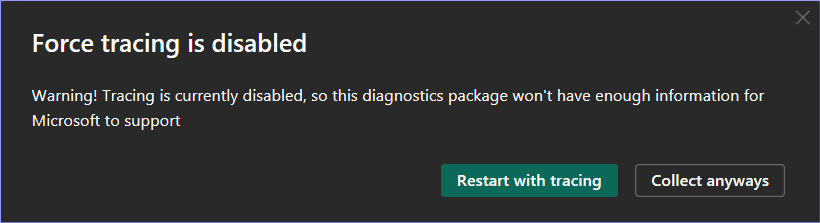
  1. Click Collect Diagnostic Information and choose Restart with Tracking when prompted.

Power BI restart with tracking screenshot

  1. After restarting, confirm that all selected options remain active.

Reproduce the Error

  1. Go to File > Options and settings > Data Source Settings.
  2. Clear all existing permissions.
  3. Repeat the steps that trigger the error to generate logs.

Locate Trace Logs

  1. Navigate to the Traces folder:
    %LocalAppData%\Microsoft\Power BI Desktop\
  2. Zip the Traces folder.

Collect Diagnostic Information

  1. Go to File > Options and settings > Options > Diagnostics > Collect Diagnostic Information.
  2. Choose the destination folder for the zip file.
  3. Power BI will create a file named PBIDesktopDiagnosticInfo.<Date>.zip in the selected location.
  4. Share both the trace and diagnostic zip files with the Endpoint Central support team for analysis.